
Introduction
Outdoor paving plays an important role in how a landscape looks, feels and functions. From garden pathways and courtyard entrances to poolside entertaining areas, the right natural stone can connect different parts of a property while adding texture and character. Travertine and limestone are popular options because their natural colour variations and understated appearance work well with a wide range of architectural styles.
However, choosing stone involves more than selecting a colour. Surface finish, drainage, exposure to weather, maintenance and installation quality all influence how a paved area performs over time.
Understanding Natural Stone for Outdoor Projects
Natural stone develops its character through geological processes, which means individual pieces can vary in tone, veining, texture and pattern. These variations can create a more organic appearance than manufactured surfaces with uniform colours and repeated designs.
Before selecting a paving material, consider the location, expected foot traffic, exposure to rain and sunlight, and the surrounding landscape. A material that works well in a sheltered courtyard may require different finishing, detailing or maintenance when installed around a swimming pool or in a fully exposed garden.
Requesting samples and reviewing the stone in natural light can help designers and property owners make a more informed decision.
Choosing Outdoor Travertine Pavers
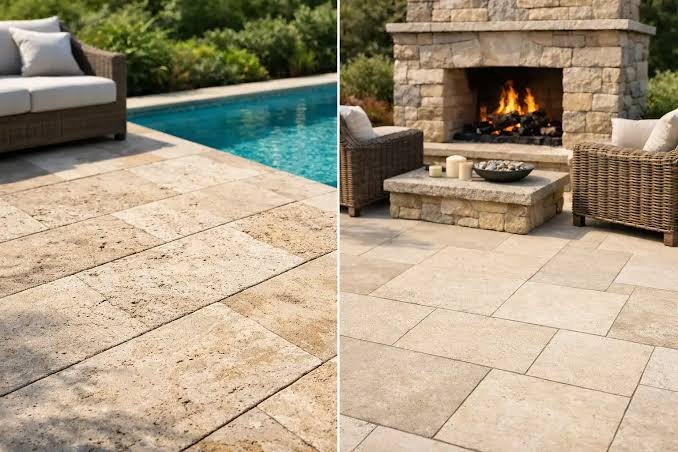
Travertine is a limestone-based natural stone formed by mineral deposits, often recognised by its warm colours, subtle tonal variation and characteristic surface features. It is frequently used in patios, alfresco entertaining areas, garden paths and pool surrounds.
When comparing outdoor travertine pavers, pay attention to the finish, thickness, intended application and recommendations for installation. Different finishes can influence the appearance, feel and maintenance requirements of the completed surface.
Travertine is naturally porous, so the selection of a suitable product and installation system matters. Ask the supplier about filling, sealing, cleaning and ongoing care, particularly for areas exposed to food spills, pool chemicals or frequent moisture. Around pools and other wet areas, verify slip resistance for the specific finish under the expected conditions rather than relying on the stone type alone.
A well-planned travertine layout can complement timber features, garden planting, rendered walls and contemporary outdoor furniture without making the landscape feel visually crowded.
Looking for Travertine Pavers?
Explore Stone Planet's premium range of outdoor travertine finishes and formats.
Where Limestone Paving Works Best
Limestone is valued for its softer visual character, which often includes cream, beige, grey and other muted tones. Its appearance can suit contemporary courtyards, formal garden paths, outdoor dining areas and landscapes designed around restrained natural colours.
When assessing outdoor limestone pavers, consider the stone's density, porosity, finish and suitability for the installation environment. Limestone products can differ considerably, so performance should be evaluated using the specifications of the actual stone rather than assuming every limestone behaves in the same way.
The surrounding environment is also important. Exposure to standing water, salt, cleaning products, heavy traffic and weather can affect long-term appearance. Appropriate drainage, a properly prepared base, suitable jointing materials and correct installation help reduce common paving problems.
For a cohesive design, limestone can be coordinated with textured walls, timber screening, greenery and other natural materials. Choosing complementary tones across paving and architectural elements can help create a unified outdoor space.
Looking for Limestone Pavers?
Discover Stone Planet's curated collection of outdoor limestone pavers for courtyards and alfresco spaces.
Travertine vs Limestone: What Should You Consider?
Neither stone is automatically the best choice for every project. The decision should reflect the intended use, appearance preferences and maintenance expectations.
Appearance
Travertine often has distinctive pores, natural markings and warm tonal variation. Limestone commonly offers a more understated, relatively consistent visual effect, although both materials vary by product.
Surface Finish
Both stones are available in different finishes. The most suitable option depends on the application, desired appearance, cleaning requirements and verified slip-resistance performance.
Maintenance
Both materials may require appropriate cleaning and, depending on the product and conditions, sealing. Follow the supplier's care instructions and use cleaning products suitable for the specific stone.
Installation
A stable base, appropriate falls for drainage, correctly selected bedding and jointing materials, and suitable movement joints are important for both materials. Professional advice is particularly valuable for pool surrounds, driveways and other demanding applications.
Budget
Compare the complete installed cost, including preparation, cutting, wastage, installation, sealing where required and future maintenance. The initial price per square metre does not tell the whole story.
Installation and Maintenance Considerations
Good installation begins with understanding the site. Soil conditions, drainage, expected loads and the proposed paving layout should be assessed before work begins. The installation system must be appropriate for the stone, substrate and intended use.
For wet areas, confirm that the selected finish meets applicable project and safety requirements. For driveways or areas subject to heavier loads, check the product's suitability and the required base construction with a qualified installer.
Routine care generally involves removing loose dirt, cleaning with stone-compatible products and addressing spills promptly. Avoid acidic cleaners unless the stone supplier specifically confirms their suitability, as acids can damage calcium-based stones such as travertine and limestone.
Sealing requirements vary by product and exposure. A sealer should be selected based on the stone, intended appearance and manufacturer's recommendations rather than applied automatically to every installation.
How to Make a More Informed Stone Selection
Before finalising a purchase, ask the supplier for the product's technical details, recommended applications, finish information, installation guidance and maintenance instructions. Where relevant, request test information for slip resistance, water absorption or other performance criteria.
Review samples in the intended setting, particularly where colour consistency matters. It is also useful to discuss the project with an experienced installer who understands natural stone and local site conditions.
Stone Planet is an Australian natural stone supplier offering travertine, limestone and other stone products for residential landscaping, outdoor living and architectural applications. Comparing product options and confirming their suitability for the project can help homeowners and professionals make a better-informed selection.
Conclusion
Travertine and limestone can both contribute to attractive, functional outdoor spaces when selected and installed appropriately. Travertine may appeal to projects seeking distinctive natural markings and warm tones, while limestone can suit designs that call for a more restrained palette. The best decision depends on the specific product, the site's conditions, the intended use and the level of care the owner is prepared to provide.
By considering technical suitability alongside design preferences, property owners, architects and landscapers can create paved areas that complement the surrounding architecture and remain practical for everyday use.